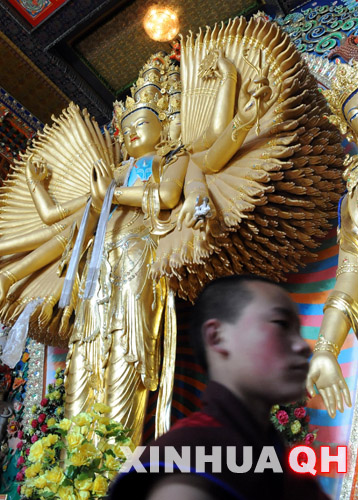
A lama is passing by a Thousand-hand Bodhisattva Statue in Wutunxia Monastery, Tongren County of Huangnan Tibetan Autonomous Prefecture in northwest China's Qinghai Province, photo from Xinhua.
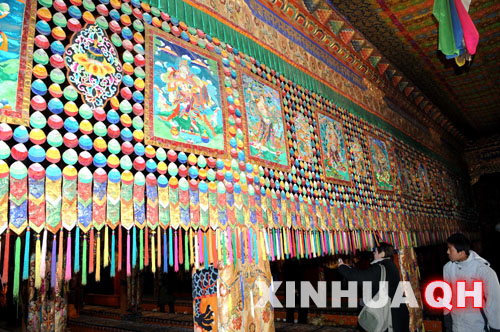
Visitors enjoy the duixiu works (a kind of Thangka painting) in Wutunxia Monastery, Tongren County of Huangnan Tibetan Autonomous Prefecture in northwest China's Qinghai Province, photo from Xinhua.
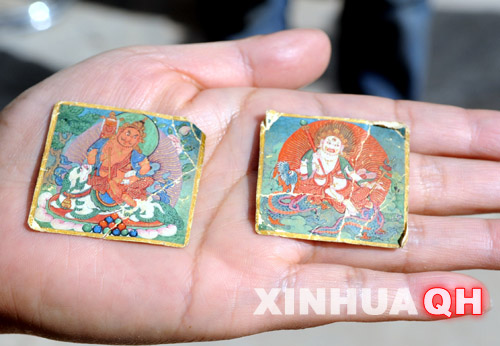
Two stamp-sized Thangka works, photo from Xinhua.
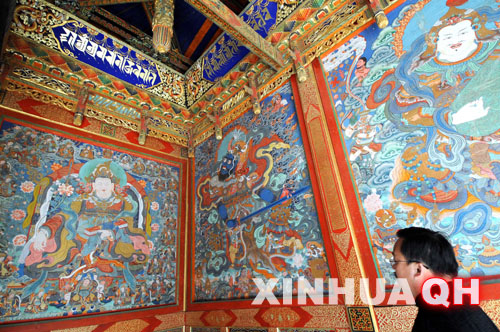
A visitor is enjoying the exquisite Tibetan fresco in Wutunxia Monastery, Tongren County of Huangnan Tibetan Autonomous Prefecture in northwest China's Qinghai Province, photo from Xinhua.
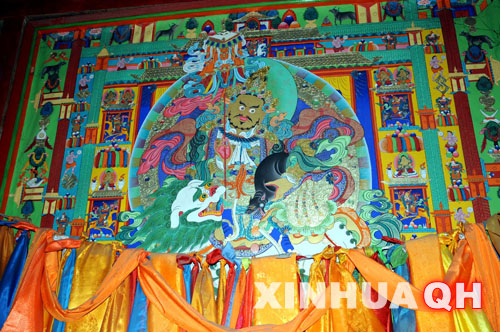
A visitor is enjoying the exquisite Tibetan fresco in Wutunxia Monastery, Tongren County of Huangnan Tibetan Autonomous Prefecture in northwest China's Qinghai Province, photo from Xinhua.
As one of the important genres of China's Tibetan Buddhism art with more than 700 years' history, the Regong art which includes Thangka, duixiu (a kind of Thangka painting), sculpture, architectural painting etc. derives its name from Regong (means "golden valley" in Tibetan language) of the Tongren County in northwest China's Qinghai Province. With its exquisite paintings, flamboyant colors and varied patterns, the Regong art has both important historical and artistic values.